
Okay, so check this out—I’ve been carrying a hardware wallet in my pocket for years. Wow! It feels strange to admit that, but really, the small things you don’t notice matter most. Initially I thought all cold storage felt the same, but then I noticed patterns that changed my mind: NFC convenience vs. physical isolation, ease-of-use versus attack surface. My instinct said there was a better middle ground, and that led me down the smart-card rabbit hole.
Here’s the thing. Short devices are easier to lose. Hmm… long devices are more awkward at the coffee shop. But a contactless smart-card sits flat in your wallet like a credit card, and that’s a game-changer for usability. On one hand, carrying a card that can tap to a phone is easy and natural. On the other hand, that convenience raises questions: is contactless secure enough? How do you protect private keys if somebody can just tap? Initially I worried about NFC being too permissive, though actually—there’s nuance.
Whoa! The first surprise is how the card can store keys in a way that the private material never leaves the card. Medium sentence here to set context. The longer thought is this: if the card’s secure element is properly isolated, and its firmware enforces cryptographic operations internally, then a smartphone becomes a mere UI; the keys remain locked inside the silicon, and signing happens on-card—so even a compromised phone can’t exfiltrate a private key if the card is designed right.
Let me be honest—I’m biased toward devices that reduce human mistakes. I’m also not 100% sure about every vendor out there; some products promise things they can’t cryptographically deliver. Something felt off about early smart-card solutions, because user experience looked polished while the security model had holes. So I started testing, poking at NFC behavior, reading specs, and yeah, breaking somethin’ in the lab just to see what would happen.
A quick primer: private keys, secure elements, and the NFC trade-offs
Private keys are the seeds of control. Short sentence. You want them offline, but you also want to spend from them sometimes. So what do you do? You use a secure element—a tamper-resistant chip that stores keys and performs cryptographic operations internally. This means the raw private key never leaves the chip. Medium sentence to explain more. Longer thought: when that chip is embedded in a contactless card, and paired with a well-audited protocol, the card can sign transactions on demand without exposing the key, which offers both the safety of cold storage and the convenience of instant NFC-based interactions.
Seriously? Contactless payments are already everywhere. Short. Remember the first time you paid with your phone? For some of us it’s second nature now. But here’s where crypto diverges from payments: transactions are signed, then broadcast; there is no central clearinghouse to reverse a bad signature. So the stakes are higher, and the card’s UX must prevent accidental approvals. On the one hand you’ll want quick taps; on the other, you need explicit confirmation steps—visual or PIN-based—so you know you’re signing the right thing.
My experience with smart-card hardware is practical: I want a device that fits my wallet, works with a modern phone, and makes it very clear when I approve a payment. Initially I thought a tiny LED or subtle vibration would be fine, but then I realized I needed a stronger affordance—something obvious so I don’t approve transactions while distracted. Actually, wait—let me rephrase that: I need a deliberate action, like entering a PIN on the card or phone, or pressing the card against the reader for a sustained period, so approvals aren’t accidental.
Check this out—some cards implement a PIN to unlock the secure element, others require a tap-and-hold gesture, and a few employ challenge-response flows that bind the transaction metadata to the signature. Medium sentence. Longer: combining multiple factors (something you have, something you know, and something you confirm visually) reduces risk significantly, because an attacker would need both physical possession of the card and knowledge of the PIN or passphrase, plus some way to fool the human confirming the transaction.
Practical threat models: what you’re actually protecting against
Okay, let’s map out threats simply. Short. Thieves who physically grab your wallet. Medium. Malware on your phone trying to trick you into signing a malicious transaction. Longer: remote attackers who lure you to install a compromised app or click a phishing link that injects rogue transaction data into your wallet UI are a real problem, but a properly designed card will display transaction details or require you to verify them before signing, which cuts down those attack vectors.
Here’s what bugs me about many wallet apps: they show cryptic raw data and assume users can parse hex and addresses. I’m not kidding—this is a usability disaster. On the other hand, a card that enforces a human-readable summary before approval helps non-experts avoid mistakes. Initially I thought that would be overkill, but then I watched a friend accidentally approve a token transfer to a malicious contract because the app hid the true recipient. That stuck with me.
Really? NFC communication is short-range, but proximity attacks can still happen. Short. For example, sophisticated attackers could attempt relay attacks that forward NFC signals over distance. Medium. Long sentence to clarify: however, such attacks are non-trivial and can be mitigated by transaction nonces, timestamps, or tethering to the phone’s secure environment, and by using on-card counters that invalidate replayed commands—so the engineering choices matter a lot.
Payments and UX: how smart-card wallets fit into daily life
I tapped my card at a farmer’s market once and felt oddly proud. Short. It was private keys, but also very normal. Medium. Longer: when crypto hardware becomes as unobtrusive as a debit card, mass adoption issues shrink because people stop treating wallets like complicated gadgets and start treating them like everyday tools that fit into a leather wallet or phone sleeve.
On the practical side, integrating contactless crypto into payment rails isn’t about replacing Visa overnight. It’s about providing a secure, user-friendly way to sign transactions for on-chain payments or off-chain services that accept crypto-authenticated messages. Some companies are already experimenting with contactless attestations and identity flows, so your card could one day sign not just transfers but login requests or other proofs of ownership.
Hmm… I’m not saying this is risk-free. Short. There are trade-offs between convenience and the attack surface you accept. Medium. Longer thought: but if you pick a well-reviewed card with a proven secure element and clear firmware upgrade paths, and if you treat recovery seriously with a multi-sig or a seed backup policy, then contactless cards can be both practical and secure for everyday use.
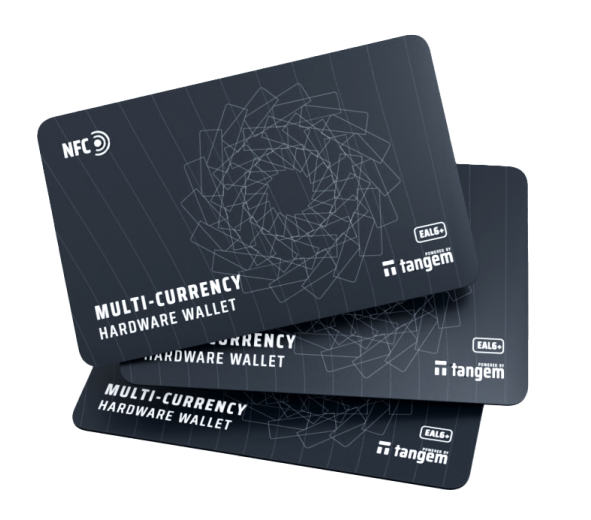
Check this out—if you’re curious about a polished solution that marries card-form factor with modern security, take a look at the tangem wallet. Short. This is a real, tangible product that shows how far the category has come. Medium. I’m embedding that as one example, not an endorsement of every feature, but it’s worth exploring if you’re thinking about a contactless approach.
FAQ
Can someone steal my crypto by tapping my card?
Short answer: unlikely if the card uses a secure element and requires a PIN or approval gesture. Medium: casual taps won’t extract a private key because signing is done on-card. Longer: physical theft still poses risk—treat the card like cash; combine it with passphrases, multi-sig setups, or a hardware-backed recovery plan so a stolen card isn’t the end of the story.
Is NFC safe for high-value transactions?
Short: yes, with caveats. Medium: rely on cards that provide transaction context and require user confirmation. Longer: for very large holdings, consider multiple layers: use cards for daily spending and keep the bulk in geographically separated cold storage or multi-sig vaults—diversify risk and assume devices can fail.
What about firmware updates and supply-chain risks?
Short: trust but verify. Medium: choose vendors with transparent audits and reproducible builds. Longer: inspect how a vendor handles secure update signing and what guarantees they offer; a poorly managed supply chain is a bigger threat than NFC itself, so prioritize reputable engineering and community scrutiny.
I’m telling you this because I’ve been around enough products to see recurring mistakes. Short. People overcomplicate backups or underplay UX, and then blame the tech. Medium. Long: the sweet spot is pragmatic design—secure hardware, intuitive confirmations, clear recovery pathways, and honest communication from manufacturers about limitations—because that mix makes the technology usable without lulling you into a false sense of safety.
So yeah—if you want a real step up from seed phrases shoved into a drawer, consider the smart-card approach. I’m not 100% evangelical, and I still keep very very sensitive holdings in multi-sig cold setups, but for everyday signatures and contactless convenience, a well-designed card could be the best compromise between security and daily usability. Somethin’ to think about…
